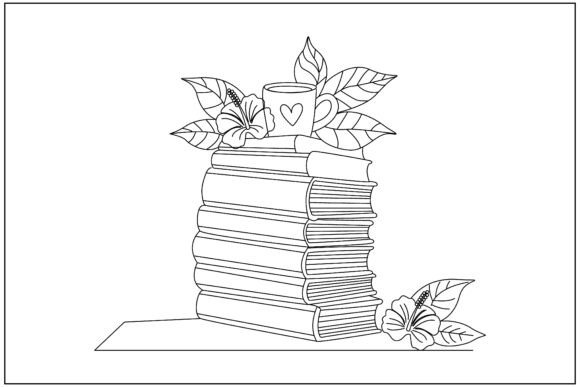
Elegant Florals for Modern Design: Floral Hardcover Books Line Art
In a digital landscape saturated with complex textures and heavy graphics, there is a distinct shift toward simplicity and elegance. This is where the Floral Hardcover Books Line Art design asset steps in. It is not merely a clipart collection; it is a versatile design element that bridges the gap between literary appreciation and botanical beauty. For designers, entrepreneurs, and content creators, this asset offers a "one line style" aesthetic—clean, minimal, and incredibly sophisticated. It captures the essence of a vintage library while maintaining a modern, airy feel that fits perfectly into current design trends.
The Anatomy of a Minimalist Asset
Understanding the visual character of this line art is key to using it effectively. The style relies on continuous, unbroken strokes to form the image of books intertwined with delicate floral arrangements. This approach creates a sense of fluidity and grace. Because the design is vector-based (available in EPS and SVG formats), it maintains perfect clarity at any size. Whether you are printing a massive wall mural or a tiny icon for a business card, the lines remain crisp at 300 DPI.
The personality of the Floral Hardcover Books Line Art is one of quiet sophistication. It appeals to a demographic that values knowledge, nature, and aesthetics. It is the visual equivalent of a rainy afternoon spent reading in a garden. For brand strategists, this asset communicates intellect and organic calm. It avoids the chaos of maximalism, offering instead a visual pause that draws the eye without overwhelming it. This makes it an ideal candidate for projects requiring a "premium font" or asset feel without the clutter.
Strategic Applications: From Apparel to Wall Decor
The true power of this design lies in its adaptability. It functions as a foundational piece for a wide array of products. For the print-on-demand market, this is a goldmine. Imagine this line art printed on a soft cotton tote bag or a ceramic mug. The clean lines translate beautifully to physical merchandise, offering a product that feels high-end and thoughtful.
In home decor, the image serves as a standalone minimalist poster or a framed art print. It fits seamlessly into a "cottagecore" or "dark academia" interior design scheme. However, its utility extends far beyond wall art:
- Publishing and Editorial Design: Use it as a chapter header, a book cover background, or a decorative element for literary magazines.
- Stationery: It is perfect for greeting cards, wedding invitations, and journal covers, adding a touch of botanical elegance.
- Digital Products: Content creators can use this as a watermark, a social media background, or a graphic for digital planners.
For those utilizing cutting machines like Cricut or Silhouette, the SVG file ensures a smooth cutting experience. You can easily extract the line art to create vinyl decals, stickers, or stencils for craft projects. The ability to change colors easily allows you to match the design to specific brand palettes or seasonal themes, making it a year-round asset.
Design Mechanics: Influence on Brand and Readability
When incorporating the Floral Hardcover Books Line Art into a brand identity, you are making a specific statement about your values. This design suggests that your brand is knowledgeable, detail-oriented, and appreciative of aesthetics. In logo design, a simplified version of this art can create a memorable icon for bookstores, educational platforms, or botanical consultants.
Regarding visual hierarchy, line art works differently than solid blocks of color. It provides texture without weight. This allows it to serve as a background layer behind text without making the text hard to read. For example, in web design, a faint, low-opacity version of this floral line art can add depth to a landing page hero section, ensuring the typography remains the star of the show.
However, context matters. While this asset is versatile, it is not a replacement for standard body text typefaces. It is a display element. In packaging design, use it to frame the product name or as a seal of quality. In social media graphics, it acts as a visual anchor, stopping the scroll with its intricate yet orderly pattern. The key is balance; let the lines breathe so the design retains its modern, clean aesthetic.
Practical Implementation and File Management
To get the most out of this asset, practical workflow considerations are essential. The files are delivered in a compressed ZIP format, requiring extraction via WinZIP, WinRAR, or standard operating system tools. Once extracted, you have access to EPS, SVG, and JPEG files.
For maximum flexibility, always start with the vector files (EPS or SVG) in software like Adobe Illustrator or Affinity Designer. This allows you to manipulate stroke weights, colors, and scale without losing quality. If you are working with non-vector software like Canva or Photoshop, the high-resolution JPEG (300 DPI) is your go-to, but remember that resizing significantly larger than the original may result in pixelation.
When evaluating font pairings to go alongside this line art, look for typefaces that complement its clean nature. A sans serif font with geometric characteristics pairs well for a modern look, while a classic serif font enhances the literary, vintage vibe. Avoid overly complex script fonts that might compete with the intricate details of the floral elements. The goal is legibility and cohesion.
Final Thoughts on Creative Versatility
The Floral Hardcover Books Line Art is more than just a digital download; it is a creative toolkit. It empowers small business owners to create professional-grade merchandise without hiring a full design team. It allows hobbyists to personalize their scrapbooks and planners with gallery-quality art. By leveraging the scalability of the vector files and the clarity of the high-DPI images, you can ensure that your projects—whether digital or physical—look polished and intentional. This asset proves that sometimes, the most impactful designs are those that simply let the lines speak for themselves.